
 Governmetn websites:


 Election Commission
of
Pakistan
Election Commission
of
Pakistan 

The Mysteries of Manghopir
The 2009 Sheedi Jaat festival at Manghopir concluded just yesterday (June14-17). I thought it may be an appropriate opportunity to revisit Manghopir. Following post has been updated with new information and new photos at several places for our revisit today.
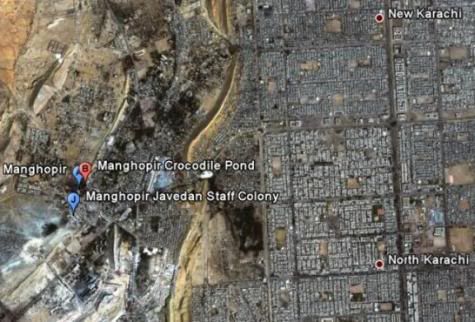
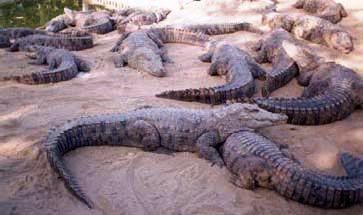 One of the vivid memories of my childhood is our family picnic visits to the Crocodile pond of Manghopir and then further to Hub Dam. For us children the Crocodile pond at Manghopir was always more fascinating than the calm lake of Hub Dam. Today, Manghopir pond is the largest colony of crocodiles in Pakistan. It is located in Northern part of Karachi. Google Earth map is given below.
Attractions at Manghopir:
 Manghopir is famous for three major attractions.
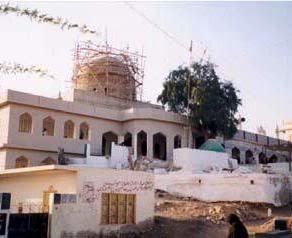
(1) The shrine of Saint Sakhi Sultan which is located on a hill at an altitude of approximately 600 ft.
(2) Adjacent to the shrine is the second attraction in the form of a crocodile pond with a hundred plus docile crocodiles lying lazily there.
(3) A kilometer away from this shrine-crocodile pit complex is the third attraction in the form of hot water sulphur springs
Where is Manghopir Located:
It is located West of North Karachi, New Karachi and Surjani Town localities.
Who was Pir Mangho?
Who was Pir Mangho? This is a question shrouded in mystery which is laced with both myths and facts. The myths seem to have an upper hand on facts. Among all other things it is also not clear that who is actually buried in the shrine. Is it some saint called Sakhi Sultan or a saint called Mangho or are these two people one and the same person.
The photo to the right shows the shrine of Manghopir. I was able to find at least four legends describing the origins of Pir Mangho. I am however, not going to draw a conclusion on what legend seems right or wrong. I’ll leave that to our readership.
Legend One: The Tale of Mangho Wasa the Bandit
According to first legend, once there lived a bandit by the name of Mangho Wasa. He was notorious for looting caravans. Once the famous saint Baba Farid Ganj Shakar (AD 1173-1266) was passing near the present day Karachi on his way to perform Hajj (pilgrimage) in Mecca when Mangho Wasa looted him. This also brought Mangho in direct contact with Baba Farid. The divine sight and righteous personality of Baba Farid impressed Mangho Wasa so much that he converted to Islam. He became one of the disciples and started practicing sufism. Baba Farid was so pleased with Mangho that he titled him a saint (pir). Thus from that day onwards Mangho came to be known as Pir Mangho and the locality became famous as Manghopir. According to this legend, it is indeed Pir Mangho Wasa who is buried in the shrine and is now called Sakhi Sultan Manghopir.
Legend Two: Hazrat Khwaja Hasan Maroof Sufi Sakhi Sultan Baba
According to this legend says the person buried at Manghopir is infact Hazrat Khwaja Hasan Maroof Sufi Sakhi Sultan Baba (this got to be the longest name ever). When Mangho Wasa the bandit visited the shrine, he out of repentance for his sins, converted to Islam and served the wayfarers all his life. The shrine is now known as Manghopir in association of Mangho Wasa dacoit who turned into a pious soul in his later life. The person buried in the shrine is however Sakhi Sultan and not Mangho Wasa. Where is Mangho Wasa buried then? This legend is silent on that question.
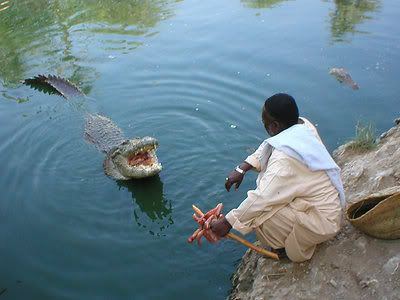
Legend Three: Pir Mangho of Arabia
The third legend says that Mangho came from Arabia in the 13th century. Soon after his arrival, he went into a meditation for 40 years in a nearby cave. He became popular as a saint because of the devotion he showed in his 40-year meditation and hence the people named him Pir Mangho. He is said to have lived to the age of 150. This legend is silent on why Mangho chose this area to go into a 40 year meditation.
Legend Four: Kamal Din’s Final Resting Place
Fourth legend comes from Alexander F Baillie’s book “Kurrachee: Past, Present and Future” where he writes: Pir Mangho is the proper designation of the shrine, to which Hindus and Muslims both resort in large numbers. It is sacred to the memory of a Saint, whose original name was Kamaldin, but whose designation was changed to that of Pir Mangho when his bones were removed to that place and interred under a mosque
The 100-Crocodile Pond:
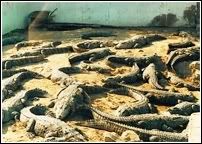
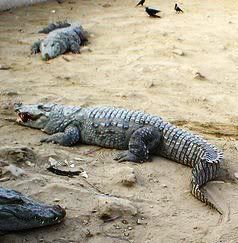
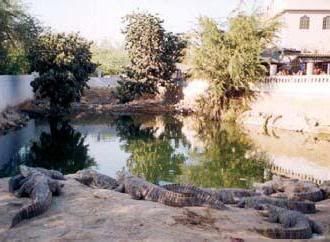 As if the origins of Pir Mangho were not mysterious enough, let us turn our attention to a 200 ft x 400 ft water pond adjacent to the shrine. Photo to the left shows this pond.
This pond is home to approximately 100 crocodiles.
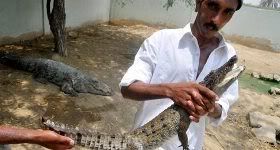 Salman Siddiqui writes about this pond in a Dawn article as:
The crocodiles of Pir Mangho have never harmed a human being over their centuries of existence in a sanctuary near the shrine of the revered saint, claims Gaddi Nasheen (holy successor) Sajjad Sheedi (seen in the photo to the right in June 2009). To demonstrate this ‘fact,’ he readily jumps into the 400 feet long, 200 feet wide tank of green water filled with over a 100 cold blooded reptiles and comes out holding a three-year old baby croc to pose in front of the camera. Even as the eight-foot long mother croc comes towards us with an angry expression, the dare devil caretaker of the shrine remains calm and freezes the intended aggressor with just a sharp nudge of his stick, which he uses like a magic wand to control the wild beasts.
The Origin of Manghopir Crocodiles:
I was able to research at least 5 more legends and a scientific theory about how the crocodiles came to live in Manghopir area. I found some of the myths quite amusing. Make your own mind about any shade of truth in them.
(i) According to the first myth, Baba Farid Ganj Shakar gifted these crocodiles to Pir Mangho on his visit to the area. Why was Baba Farid traveling with crocodiles is unclear.
(ii) Second myth says that crocodiles were brought to Manghopir by a saint called Mor Mubarak (the blessed Peacock) from a cave in Korangi. Korangi is a Karachi town located some 50 km to the east of Manghopir.
(iii) Another version of the same myth says that Mor Mubarak had brought these crocodiles from a small brackish pit located in Waghodar area. Mor Mubarak tomb is also located in Waghodar, some 120 km upstream from Hub Dam. A perennial lake here still houses 10 marsh crocodiles that have been living here since Hub River flowed full. Therefore it is suggested that Manghopir crocodiles may have come downstream from here.
(iv) According to fourth myth, the famous saint of Sehwan Sindh, Lal Shahbaz Qalandar once visited the area. He was pained to see the area very inhospitable therefore with his miracles he caused a hot spring to issue forth as well as some date palms to spring up from the ground. The crocodiles were originally the lice in Lal Shahbaz’s hair which he gifted to Pir Mangho. He put them in the pond and each of them turned into a crocodile.
(v) The fifth myth, which I think is the most amusing, says that crocodiles were actually the lice in the hair of Pir Mangho. One day the lice were itching ‘pir sahib’ so much that in anger he stamped his feet on the ground and two sulfur pools were formed, in which the lice jumped and later grew up to become crocodiles.
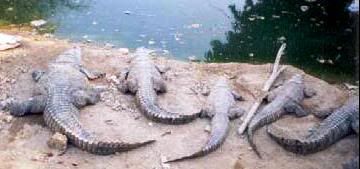
Some people have tried to give scientific explanation to crocodiles’ presence. These crocodiles were carried through some heavy floods, during ancient times and later gathered at this pond. Archaeological investigations have also suggested the existence of a Bronze Age settlement (2500-1700 BC) near Manghopir, who worshipped crocodiles.
Sohrab K. H. Katrak who was mayor of Karachi in 1942-43, in an essay about Karachi, writes about Manghopir in following words:
Twelve miles away from Karachi is a place called Magarpeer. It is a well-known swamp fed by a hot spring of reputed medical value. Adjoining it is a shrine of Pir Mangho, an ancient Mussalman saint, which is visited by hundreds of pilgrims every week. The swamp is filled with huge alligators (known as ‘muggers’), some forty in number. The name was changed from Pir Mangho to Mugger Pir during the British regime.About a mile from this pond of alligators is a Lepers’ Asylum, in the building of which a very prominent part was taken by Sadhu Navalrai and his son Sadhu Hiranand, the two celebrated saintly Sindhis of Hyderabad.
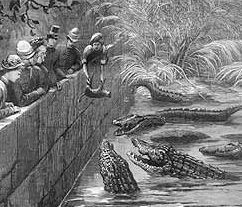 The image to the right shows live feeding of Manghopir crocodiles circa 1870s.
The Sheedis of Pakistan:
Karachi has a sizable population of people of African origin. They are the descendants of those slaves who were brought from Oman to Makran in the past. Later, recurring famine brought them liberty.
There are five main groups of Sheedi community in Pakistan. They are Lasi, Hyderabadi, Kharadari, Lasbela and Sheedis.
Every year theSheedis, the local name for Afro-Pakistanis, gather in Manghopir area, where they erect a temporary colony and live there for an entire week with their families and dance and sing in a festival called Sheedi jaat.
The Sheedi Jaat Festival at Manghopir:
The week long festival at Manghopir is called Sheedi Jaat. The date of the festival is decided with mutual consultation among notables of the five socio-cultural groups of the Sheedi tribe (named above) each year.
The festival is arranged in summer. For 2009, its dates were June 14 to June. The sheedi mela is very distinct from another festival at Manghopir which is the urs of the saint Sakhi Sultan. The urs happens in Islamic month of Zil-Hajj.
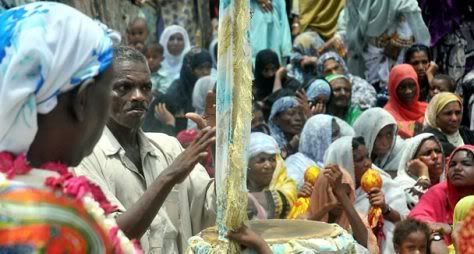
The photo above is courtesy of Fahim Siddiqui. It shows a glimpse of Sheedi jaat mela of 2009.
What Happens in Sheedi Jaat Festival?
The festival is a curious combination of solemn spiritual rituals and cultural celebrations. These include collective sessions of meditation accompanied by sacred lyrics often rendered by an elderly woman or man in a soulful voice, followed by dhamaal sessions.
 There are songs in a bizarre blend of Balochi, Urdu and Gujrati, with a few Swahili words, celebrating blackhood. Most of the songs contain the refrain of Sheedi Basha (read Badshah) meaning the black king. And, of course, with the singing comes dancing in typical African rhythms and African dance called Leva.
According to Salman Siddiqui’s research:
A procession of Sheedi women and men leave their homes at around noon each day and march towards the shrine to the sound of drumbeats. The parade is preceded by young boys holding four ‘Alams’ bearing a star symbol, which is reminiscent of the Muharram processions. But instead of the chest beating ‘Matam’ which the Shia community employs to express their mourning for the loss of Imam Hussain in Karbala, the Sheedis sing songs in Swahili to celebrate the happy occasion. The verses also contain a few phrases from the Urdu language
The festival revolves around the crocodiles confirming the participants’ African roots as crocodile worship was prevalent in the swamps and forests of Africa and still is among some tribes of Guinea and Zaire.
During the festival people make their pledges at the shrine of Pir Mangho through offering fresh meat (believed to be the sacrificial) to the crocodiles.
Respect Shown to Dead Crocodiles:
Sheedis believe that the crocodiles of Manghopir do not harm the saint’s followers. Owing to this belief, when a crocodile dies, it is buried with equal respect and formalities just as human being. There is also a reserved place for burying such dead crocodiles.
The Garlanding Ceremony of Mor Sahib:
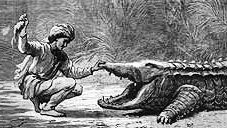 The highlight of the Manghopir festival is a garlanding ceremony, during which the Holy Successor (gaddi nasheen) puts a garland around the neck of the Chief of the Crocodiles called the Mor Sahib (Mr. Peacock). The image to the right shows feeding of Mor Sahib in 1878. He is 12 feet long. Besides ‘Mor Sahib’, the rest of the crocodiles are six to seven feet in length.
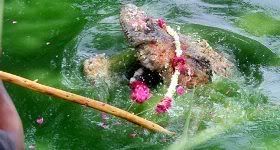 Success of this rite depends solely on the mood of old creature, but according to his keeper, he obliges most of the time and presents himself for the ritual. If the mood of Mor Sahib Crocodile is not so good then a bribe in the form of chunks of fresh meat does the trick. The meat offered to the crocodile is also not just any meat. It is chosen from the neck part of a goat, which is considered as the best meat.
Color and Sweets for the Crocodiles:
Crocodiles are also sprinkled with color and are served cooked food, halwa (sweetmeat) as a ritual. People here believe the crocodiles won’t attack them because they (crocodiles) are the disciples of Manghopir.
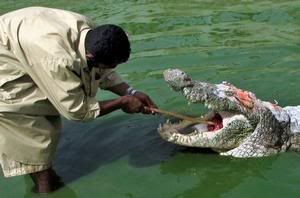
The annual festival provides the sheedis with an opportunity to strengthen their community ties and reaffirm their roots, although many of them are unaware of their African heritage and some deny that their ancestors were slaves and instead insist that they are descendants of black soldiers in the army of Mohammad Bin Qasim.
Thus what happens here may be described as some pagan rituals of worshipping crocodiles along with Islamic influence.
Crocodile Worship
According to Salman Siddiqui’s research:
The custom of offering food to crocodiles at shrines is not unique to Pakistan. A similar ceremony also takes place at the shrine of Khan Jahan Ali in Bangladesh. People make offerings to reptiles in many parts of South East Asia as well to ward off evil. There is also a tradition of worshipping crocodiles, which dates back to ancient times. In Egypt, people living by the river Nile used to worship Sobek, a god who had a human body but a crocodile head. Even today, this tradition is practiced by some tribes in parts of Africa.
In 1960s the population of crocodiles had dropped to just three. The pond in which they live had silted to a shallow depth of 3 feet and it was making crocodiles life miserable. Because of strong conservatory efforts of Wildlife conservation society of Pakistan the number of crocodiles has reached up to 100. Now the pit has become too small for them and many a times cannibalism ensues due to mutual fight for space and grabbing for food.
The Sulphur Spring of Manghopir:
Now to the third attraction of the area where sulphur springs are located a kilometer away from the shrine. 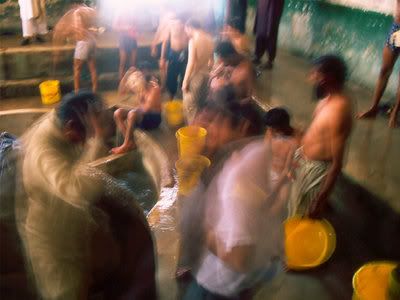 Warm water passing through the sulphur rocks contains some medicinal qualities and many people from long distances, with skin diseases regularly visit there to have a bath to cure them. There are separate swimming pools and shower rooms for men and women.
As of 2006 the ticket price of taking a bath here is Rupees 5.
Scientific analysis also show this warm water is naturally saturated with carbon dioxide, besides containing some sulphur and other skin friendly nourishments, which are no doubt suitable for many skin-diseased patients. The temperature of these sulfur ponds remains between 43C (110F) to 54C (130F). The photo to the right shows people taking bath in the sulfur springs
In 1963 a 200-bed hospital called the Marie Adelaide Leprosy Center was established nearby and it is to date the largest hospital of skin care in Karachi.
Photo Credits:
(i) Sheedi Mela Photos - Fahim Siddiqui, Dawn, June 18, 2009
(ii) Clicking on individual photos will take you to their source sites.
References:
(i) Crocodile Specialist Group Newsletter, Volume 23, No 3, July 2004 - September 2004.
(ii) Insight Guide Pakistan, Third edition 2000.
(iii) Karachi During the British Era - Two histories of a Modern City: Oxford University Press, 2007
(iv) Croc Fest - Salman Siddiqui, Dawn, June 18, 2009
(v) Google Earth

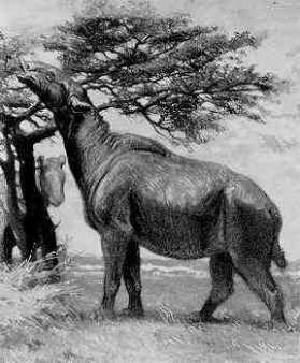
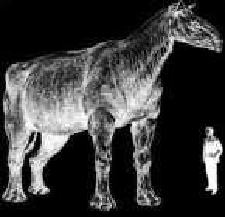
 This mammal is called Baluchitherium (The Beast of Balochistan). So far the fossils of this mammal have only been found in Baluchistan and Central Asia.
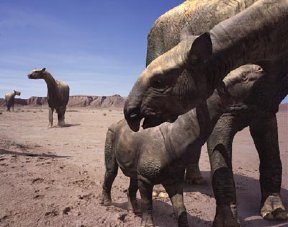 All in all it was a 5 year long on-and-off study. The French team was led by Professor Jean-Loup Welcomme of the Natural History Museum in Paris. While the first complete skeleton of Baluchitherium was dicscovered in 1999, it was as early as 1846 when first pieces of fossilized Baluchitherium were accidentally stumbled upon in Dera Bugti by a British Army officer who went by the name of Vickary.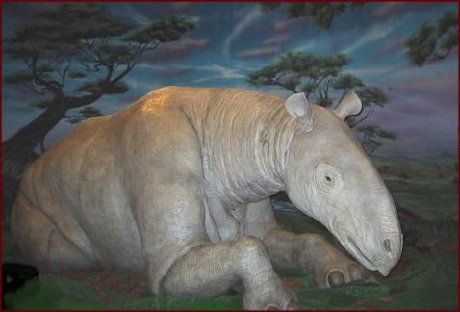
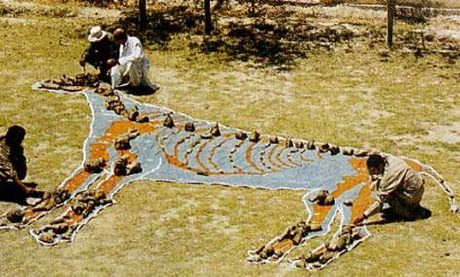
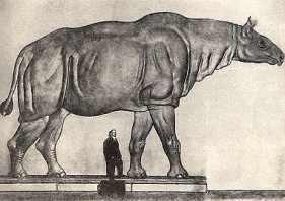 Eventhough Balochistan is now mostly a desert but since Baluchitherium would have needed as much as two tonnes of fodder every day, the French team believes this area of Pakistan must have been heavily forested.
 In an article written few years ago at www.thehotspotline.com blogger Ali Khan writes:
 The latest news about Baluchitherium came last week when in early March 2008, more pieces of Baluchitherium have been excavated in Dera Bugti area. I read this update in Jang’s latest news feed but didn’t see the detailed news on it in the regular paper.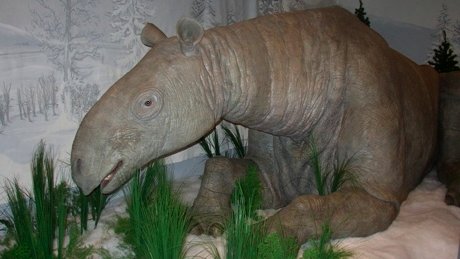
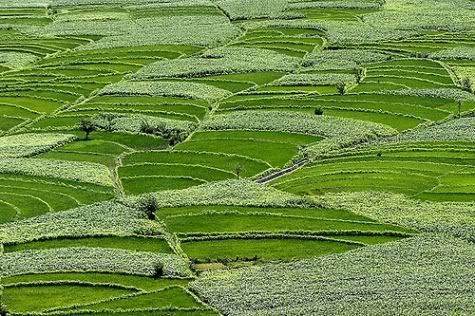
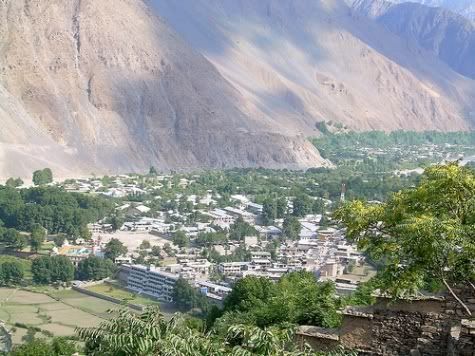
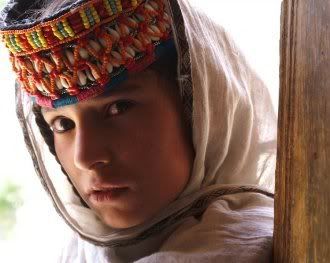
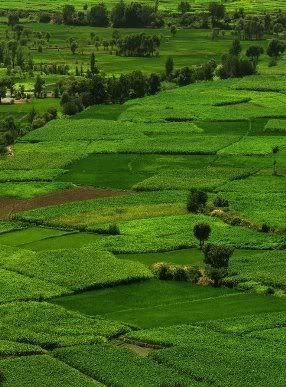 The Chitral valley has a long history. It was subdued by Alexander from Macedonian, Chinese army and Timur in the past and was under king named Shah Rais (descendent of Balti rulers) in sixteenth century. Son of Sangin Ali – advisor of Shah Rais and forefather of Adamzada clan — threw out the king and took over the power. Kators (branch of Adamzada clan) ruled Chitral till 1960.
 Two years later Nizam was overthrown by his half brother Amir ul Mulk. Umra Khan also edged up the valley, taking Drosh. In a show of force, the Gilgit Political Agent Major George Scott Robertson (writer of The Kafirs of the Hindukush) arrived at Chitral Town with 400 soldiers and moved into the fort — the ancestral home. At this time, Sher Afzal appeared again, this time joined by people of Chitral. Badly beaten in an initial skirmish, the British found themselves besieged in the fort. Four hundred people with food and ammunition nearly gone were finally bailed out after 46 days by reinforcement from Gilgit who had hauled cannons over the Shandur pass in shoulder high snow. A bigger force fought its way over the Lowari Pass but arrived too late to help. Umra Khan fled to Afghanistan, Sher Afzal was captured, Amir arrested and his 14 years old brother Shuja ul Mulk was commissioned as Mehtar. In the aftermath, this episode somehow got recast as a heroic British campaign and Robertson was even knighted. A classic example of history chronicled from authors’ point of view.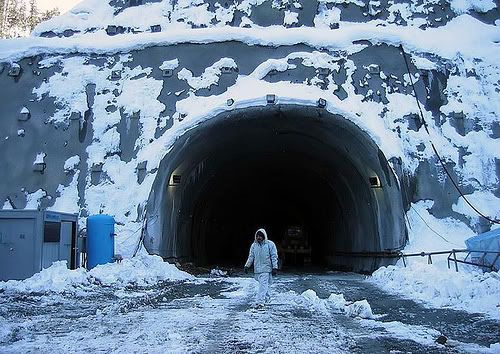
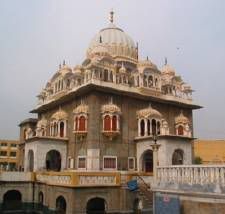
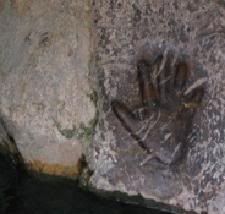
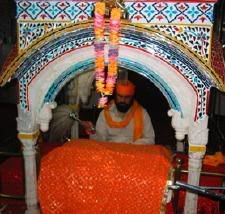
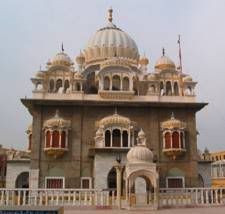
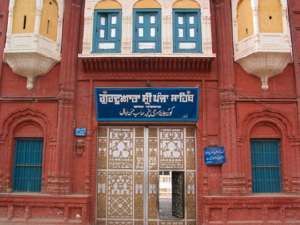
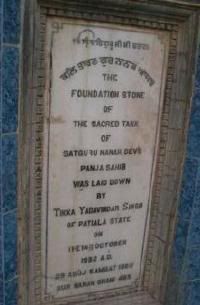 I drove last week, along with a friend not through but to Hasan Abdal to visit Panja Sahib and learn something about it first hand. (2007 being officially declared the Visit Pakistan Year, I thought the least I could do was to visit some interesting sites in my neighborhood.)
 Attracted by his teachings, both Muslims and Hindus of the hamlet and the surrounding area started flocking around Guru Nanak. At the top of the hill, at the back of the back of Hasan Abdal, there lived a ‘peer’ (a Muslim saint of sorts). He was called Baba Wali Kandhari. His last name referred to his origins in Kandhar, Afghanistan. Other than having a better vantage point from where he could see all that happened in the village below, Baba Kandhari also had the advantage of having a fresh water spring nearby, which was the source of water not only for Baba Kandhari but also for the people down below.
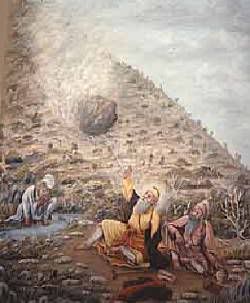 Becoming desperate, the people turned to Guru Nanak asking him what should they do. According to the story, Guru Nanak told them not to despair and trust God, and then, pointing to a large stone embedded in the ground, asked them to dislodge it. When they pushed the stone aside, fresh water gushed forth from the ground, enough for the needs of the little hamlet and some more!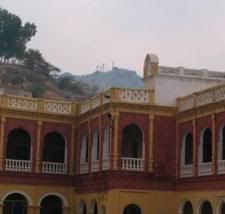
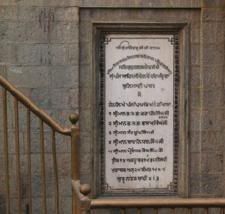
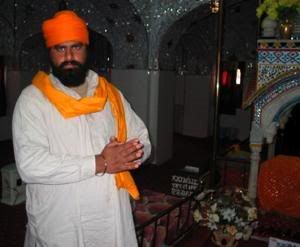 The caretaker of the gurdawara or garanthi, a very large and soft- spoken man, named Saddam Singh (yes, Saddam Singh! That’s what he told me), allowed us inside the gurdawara.
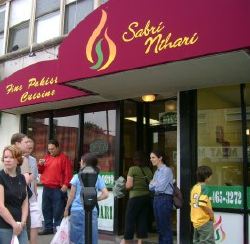 For variety as well as authenticity Devon Street (Pinglish = ‘Diwaan’) in Chicago remains the yardstick of the Pakistani food experience in North America. However, great culinary treasures are also to be found in in Dallas and in the San Francisco Bay Area. At least according to those who responded here, the New York / New Jersey belt has a lot of Pakistani food, but not the best Pakistani food to offer. Please tell us if this is wrong, and also tell us who you would add here. Many places, however, are like Boston; an occasional Pakistani eatery opens, but then disappears for lack of patrons or bad management. Here are some specific suggestions from our readers:
 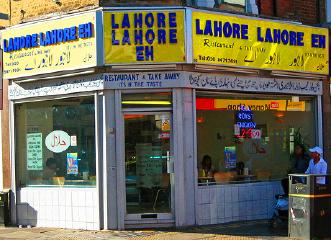 Some readers lament that there are lots of ‘desi’ restaurants in the UK, especially London, but not too many real ‘Pakistani’ ones. However, other readers point out that there is both quantity and quality to be found. In and around London, of course, you find lots and lots of Pakistani places. But as you will see from the list below, good Pakistani food is to be had all over the country. Green Street in East London is the mini-Pakistan and full of “All Things Pakistani” we are told. High Street and Hoe Street in Walthamstow in East London and Ilford Lane in Ilford in the North East also have great concentrations of Pakistani khabba. Here are some specific suggestions from our readers:
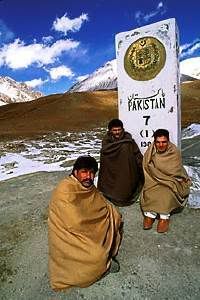 om simple sight seeing to hard adventure, or a mix of both. Khunjerab surpasses them all. It is one of the world’s highest passes connecting two countries, and mountains on either side.
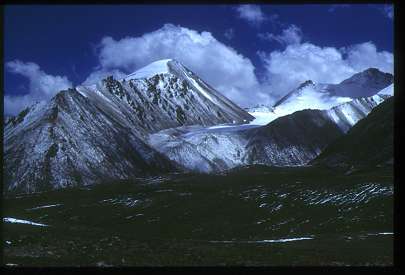 I have very romantic memories of sitting at lonely places (don’t call me loner), enjoying physical beauty and being taken by my own thoughts and perceptions of the places I happened to be at. One pleasure in travelling alone is that no one is around to remind about others waiting for you to start back! Alone at Khunjerab, climbing up a gorge, I was treated to the rare sight of Markhor sheep (well, I think I saw one). So artfully had nature blended them with the terrain that it becomes hard to tell where the rocks or Markhor stands? With the air thinning I continued climbing, hairpin after hairpin till I began to see the straight road that spans beyond Sost - Pakistan custom and immigration post. This is another matchless experience. Looking up to and walking on mountains, at Khunjerab one see them almost at eye level. I sat at the gorge for a while and saw so much unappreciated beauty. BTW, This is one place where Salageet (Shilajit) comes from?
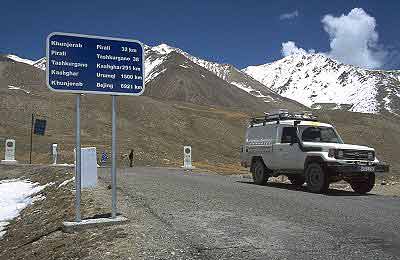 Any travellers can have all this and more using a bus service or better still a four wheel driven topless jeep on KKH. Khunjerab is also a starting point for more adventurous who want to explore the catchments of Sukhtar Abad commonly known as the Blue Sheep Valley — a little known habitat of Blue sheep, the Himalayan ibex and possibly snow leopards. Due to lack of tracks, Sukhtar Abad is not easily accessible. It can be approached from three different routes, Nazim Abad village through Dikarjerb crossing — a high altitude pass, Hussain Abad village through Gourdour Pass; and from the Khunjerab River, when it is relatively dry in winters. Those who have visited the valley say it is very rewarding but takes some serious trekking to reach the valley.


 English Newspapers


 Dars-e-Quraan
 Dr. Israr Ahmad
